A Truly Profound Question

Posted by Unrepentant Escapist

February 7, 2011 -- 7:01 a.m.

From The Onion's review of Orson Scott Card's book, Lost Gate:
Ever notice how nobody ever writes a series about a young boy with an amazing knack for toilet cleaning and tax reform?
Now that's a writing prompt.

Writing Prompt--Two Points of Views

Posted by Unrepentant Escapist

August 31, 2010 -- 3:04 p.m.

I'm reading a book that features the POVs of multiple siblings. As soon as I saw that, I sat back and started waiting for the father to die. It took 100 pages for him to kick the bucket, but kick the bucket he did. After George R.R. Martin did that so wonderfully in Game of Thrones, other authors have tried imitating it with various levels of success. Most of them end up failing. At this point in time, I'm so jaded, I prefer the authors who kill the father off pretty quick, or make it so obvious he's going to die, you're interested in the how, not the actual event. Books whose only twist is that the father dies bore me, because I can see it coming from fifty miles away.

The amazing thing is, when I read Game of Thrones the first time, I didn't see it coming. Looking back, I'm not sure how I missed it. Fantasy books are like Disney moives--if daddy's there at all, daddy's going to die so that the kids can go on adventures. Mommy is sometimes left alive--perhaps because our social views of women allow for a more passive female character. Mom is helpless, but dad, if he were alive, would do something, so we have to kill him for the sake of the plot. I've heard discussions of "orphan syndrome" related to middle grade and young adult fiction, but not in fantasy as a genre. The only example I can think of at the moment where the dad didn't die is Wheel of Time.

I think why Game of Thrones succeeded in the whole orphaning is because George R.R. Martin is such a wizard with slight of hand. He had us focussed on the mystery, the politics, the threads going on in other realms... (the wall, Daeny). We were so busy wondering if Cercei was going to kill Robert or Jaime was going to kill the children or what that we didn't notice the main character's death sneaking up on us.

So, if you're going to kill a father-figure in your book, at least give me a mystery to distract me while I wait for the inevitable assassination/beheading. Better yet, maybe you can let a father live, occasionally.

August progress report: I'm currently reworking a revision of God's Play; adding occasionally to Skin Farm, which is now two-thirds done; and plotting a new epic fantasy novel called City of Murderers, which may be my next project. I have more projects than I have patience to write. I'm listening to Terry Pratchett audio books and the aforementioned father-killing novel, which so far has been a demonstration of incredibly poor writing. I keep wondering if it's a translation, because many of the sentences make absolutely no sense. Terry Pratchett, on the other hand, is brilliant, and even more brilliant when read in the dry, British accents of Nigel Planer.

WRITING PROMPT #17

Title: Agree to Disagree
Genre: Any
Type: Character

So I had a dream. I don't remember the content, but I do remember this--I was watching something, something significant. I woke up and rolled over and went back to sleep. I repeated the same dream, except this time, I was someone different. And it showed. The changes in my perception were slight, but important. My actions were slightly different as well. Both character perceived each other's reasons for doing things completely inaccurately.

This happens in real life. Three people will remember the same conversation differently. They will also remember the same event differently.

I want you to take two characters through a scene. Any kind of scene--an argument, repairs to a space station in orbit, a battle against a red-skinned monster with three tongues. Write the scene from one POV, and then write the same scene from the other character's POV. How accurate are each character's perceptions? You can have them be diametrically opposed, if you want, but I think this exercise is more interesting with two characters who view the same things with only slight differences.

You can do this one of two ways. If you're like me, a discovery writer, then you write the two scenes and then compare them to gleam the differences in personality and such. If you're an outliner, you might come up with a list of major differences between how the characters see the world and try to work them into the text.

I'm back! And gone!

Posted by Unrepentant Escapist

July 26, 2010 -- 3:47 p.m.

Back from Hawaii! Now off to Oregon. I'll tell about the Maui trip another time. I have some really cool pictures of this garden that had insane plants. Like, stuff you'd expect to see on Mars if it had water. Sea turtles were everywhere and SCUBA diving rocks and three different kinds of dolphins rocked the side of our PWF tour boat. Oh, and white chocolate macadamia pancakes with coconut syrrup? TO DIE FOR. I miss fresh pineapple.

Well, I guess that was my trip. Read one of the most horrible pieces of fiction I have in awhile. It was supposed to be a black comedy, if black comedy is defined by stupid suburbenites whining but never doing anything about their crappy lives and jumping into bed with anything that moves. Oh, and their kindergartner boy has his eye shot out in a school shooting at the end. Are you laughing yet?

I'll be back in two weeks, after an old friend's wedding. I'm going to try and see lots of people I haven't seen since high school, which will be for the win.

Skin Farm is about 80 pages from reaching the 80,000 word mark now.

WRITING PROMPT #16

Title: Place
Genre: Any
Type: Setting

So many of the great books have at least a side-trip to fun foreign locations. In classic fantasy setting-based travelougues, journeying strange places and meeting strange people is all you do. Gotta love the weird alien planets, too. I've been pouting because I can't find my copy of Dune, the epitemy of a great setting.

Unfortunately, a lot of the epic settings of the present just don't feel very epic to me. Maybe because I'm a jaded reader and I've seen it all done. Blah blah forest blah blah blah space suit. You know what I want to read? A fantasy novel set in Afganistan! There's probably one out there, but I haven't read it yet.

But that's just me. Most people want to read books about places they would actually like to visit. So if you could go anywhere in the world, where would it be? Why there? If it has to do with social connections, it doesn't count. Pick somewhere where you don't know anybody. Pick what you think sounds really cool about that setting and expand it, incorporate it into your world. Now write about your exotic fantasy-land vacation. Go wild. Talk about stuff that will never ever come up in the novel, because your character is a million miles away, but this tourist will see it.

Avatar was a success largely because it had a cool setting that was beautiful to look at. Can you replicate the same emotions? The same feeling of strangeness? Or will you try and evoke a different emotion, terror or awe?

Prompt: Puzzled

Posted by Unrepentant Escapist

June 7, 2010 -- 4:19 p.m.

I enjoyed my trip to the sand dunes with my family. I wish we could do something as fun every week. I think I'll be picking sand out of my shoes for the next decade.

So I just finished Da Vinci Code, which I had never read before. I read it so I could see what the fuss was all about. Spoilers abound in the post because, you know, it's like...old news.

I wasn't a fan. I'm glad the book brought more people to the bookstore than who normally would come, but I didn't like it. It was a little slow for a thriller. Give me the short, soft stylings of Lee Child any day of the week. That man can do more with the phrase "he said nothing" than any other author can do with a paragraph of emotive description (including myself.)

However, I'm not going to criticize it, because writers living in glass houses shouldn't throw stones, and you can't really argue with success.

Other authors have used "the right blood" concept, even if I haven't seen it linked with the holy grail except in fringe literature. It seems odd that the "importance of blood" fantasy trope occasionally migrates over to popular literature. Another book I read that involved blood had a quest to find a descendant of Hitler. Then they found his little granddaughter, who was about 8 or so, and the heroine shot her on sight because she had Hitler's charisma. And the hero was absolutely okay with murdering a child because she had the same blood as her father. I may be wrong about the age, but even if she was a young adult, she still hadn't done anything yet. I think she was in the middle of saying how evil her grandfather was when the heroine shot her, too.

My attempts to figure out what that book's name was led me to all sorts of interesting information, including a web site that says Angela Merkel is Hitler's daughter via artificial insemination. The evidence: A doctor of Hilter's was allegedly carrying around a vial of his sperm around Eastern Germany about the time Angela Merkel was conceived. Also, they share the same birthday.

Wow, who knew I was Jesse Jackson's illegitimate daughter? After all, we were both born on Oct. 8.

I wonder sometimes why people demonize politicians with really ridiculous arguments when ordinary arguments will do. I remember receiving all sorts of crack email during the last presidential election telling me Obama was the anti-Christ signalling the end of days. Well, I'm still waiting for that apocalypse.

Did I ever tell you I saw a PBS special on the 2012 Aztec calendar thing, and one professor talked about email he had received from a mother asking if she should poison her children in 2011 so they wouldn't have to suffer it? WHY ARE PEOPLE SO INSANE!

But back to the Da Vinci Code: I was amused that, when the book won a plagerism settlement, the judge added codes to his opinion. I'm not sure an American judge would have gotten away with being that flippant. Unless they're Scalia. His dissents are so fun to read, even if I rarely agree with them.

What can writers learn from Da Vinci Code's popularity:

• I did admire Dan Brown's penchant for research, even if not all of it was accurate. The way he planted enough facts that sounded plausible in the beginning of the book made the later leaps of logic feel more solid.

• He placed strategic hooks to draw readers on. He had a mystery pulling at the reader in every chapter, and he added another layer on it every time. If I wasn't always absolutely enthralled, I could at least see that it was meant to be enthralling. Red herrings also abounded. I was absolutely sure the French inspector dude was "the teacher."

• Any press is good press. The controversy surrounding it probably spiked interest in the book. I was amused when I read the Catholic web site debunking the Da Vinci Code because it says, "Its publisher, Doubleday, released it with much fanfare in March 2003 and heavily promoted it. As a result, it debuted at #1 on the New York Times bestseller list and has remained on it since..." Which implies readers had nothing to do with its popularity. I bet publishers wish they had the power to create a Da Vinci Code level seller with every book. But the publicity surrounding it, both at its launch and later, did, undoubtedly, help.

• Sometimes an unusual theme or wacky theory can be really powerful, if it makes good watercooler chat. I often think that it's very difficult to create a completely original work because at least one person has done anything you ever tried to do already. Well, I have never seen a thriller based around the descendents of Christ, holy grail and goddess-worship symbology before. I would never have expected to see those elements in a best-selling book. I'm not sure picking a loony, delicious gossip-worthy theory and structuring a book around it could actually work again, but who knows?

But the bottom line is this: people like puzzles. The same people who do the cryptograms, crosswords and sudokus in the newspaper read a lot of books. If your book doesn't have a good element of mystery in it, you're missing out on a chance to entrance the reader. Every time you can add a puzzle--even if it's something small, like the evil character's motivation--you make it that much harder to put your book down.

WRITING PROMPT #15
Title: Puzzled
Genre: None
Type: Whatever

Pick an element: character, setting, world-building detail, plot, etc. and add a puzzle. It can be anything--a puzzle about a character's true identity. A word anagram that will give away the final location of that magical McGuffin. A cryptic sentence left in a mad scientist's diary. The bad guy's motivation. See if you can withhold something until the end, and drop enough clues to leave the reader guessing and hungry for more.

What makes an interesting puzzle to you? Do you like word games? Number mazes? Whatever you do like, see if you can combine it with some other element in your book to make a good mystery. Little or big, both can be useful.

Dream, Writing Prompt #14: Place of Peace

Posted by Unrepentant Escapist

March 8, 2010 -- 6:23 a.m.

I had an odd dream last night. I was biking and a friend of mine came up to me. I knew she was the servant of an old woman who lived in a house nobody but writers could see. She was a witch, but not the bad kind. A wise woman muse who offered advice to young writers. She lived there alone, except for her servant, her daughter/niece, who spent time reading, chuckling, and breaking wood for their shack's fireplace. I knew that this muse had given Robert Jordan advice in his youth, and that she had been his model for an aes sedai, because when I walked into her shack and saw her cloak on her hook, I saw not one, but many, all flickering because they contained all the ages and styles of the world, including Verin's brown vines. She had lived a long time, was very powerful, and very wise.

I would go to visit her as often as I could. Once, I accidentally led a boy to her, even though her location had to be secret. He followed me, desperate to talk to her, even though the road to her house is laced with broken glass meant to cut the unworthy. I'm not sure what happened to him. When I tried to follow him in, the muse's servant slammed the door in my face.

But one day, the servant came to me and told me I had to come, and to bring one of the people in my writing group. She warned him that the "life" of his story was in danger because it wasn't political enough. By which she meant that he wasn't exploring the tyranny of the government's effect on the 'little people' and he needed to do more with it. He needed to reflect on our own government and compare it to his, weaving its follies of history into his word. His story lacked Truth with a capital T, and so would fail.

I asked her what I needed to do. About how I was afraid I was just a wordcrafter, not a storyteller, because I can spin descriptions and make words dance in people's heads, but my stories are not as good as the writing deserves. About my concerns about whether I should continue on as I am, unemployed except for the small jobs, or try to find a job that will let me write and earn money at the same time. Her answer was mostly a shrug, that I should do what I think is best. Then she asked me to describe the stories I was working on, and I told her about the three, how I couldn't seem to settle on my next project because none of them felt right. She told me all my stories were good ones and the main thing I lacked was patience. Patience with myself, patience with others. Patience with the characters that hadn't yet found themselves in my text.

Then she stroked my cheek and said, "don't worry, if you work hard enough, you'll be able to take my place here one day."

And I woke up deliriously happy, because I knew that this is who I am and always will be, and one day, I will get to live in a wood-heated hut in the middle of the slums that no one can see, giving advice to young writers that can change lives. Coax happiness. Give thought.

***

A true dream, I think, advice to stay on the path I have chosen. People who read my writing later may be surprised to find out that I'm a Christian, because I write such blasphemous things about gods. Take the current epic fantasy I'm working on, where there are seven nations, each one's culture inspired by the seven deadly sins. Part of Christianity's domination of the western world came from the fact it absorbed pagan religions. In my world, it's the other way around, paganity won, but many of the Christian rituals are kept, because they were absorbed. This creates interesting contradictions that I'm still trying to work out (Like, why gods and goddess with such sexual natures would have priests so fully determined to censor everything).

I suppose it is my backlash against worshippers of the recidivist Goddess theory, which believes that there was once a goddess religion that taught peace and love and everyone was happy until the big bad male-centered religions came to suppress them, demonizing Eve and Pandora until all we have left of that religion are little fertility statues and memories of goddesses as bearers of evil.

I believe that there certainly was goddess-worship in the past and that it certainly was repressed, but I don't believe that it was the peace-loving, nature-worship that certain authors claim it was. So my goddesses are sexually-charged and as brutal as their male collegues. Perhaps because I am so full of emotional conflict and hatred and frustration, I sympathize more with the war bringers dieties than the mascots of peace. They are more...human.

But though I cannot explain god's interventions in certain lives, I believe sometimes he whispers peace and confidence to me through my dreams. I believe that it is not the wish-fulfillment of my subconscious, but a true message to keep on trying until I get it right.

So I have written my place of peace, of inspiration. What's yours?

WRITING PROMPT #14
Title: Place of Peace
Genre: None
Type: Self-exploration
, Dialogue

If you could go somewhere to experience peace and confidence in yourself as a writer, somewhere to go and get ideas, where would it be? What would it look like? Who would be there? What kind of questions would you ask that person?

Some people are lucky enough to have places like this in real life. In high school, I had a bridge. And under it, I could lay back and just listen to people crossing and talking, and no one knew that I was there. I liked that. I'm a bit of a sociophobe, so being able to satisfy the human need for company without having the stress of having to act a certain way was very nice. I never had to perform for anyone, but I wasn't completely isolated either. That's my perfect place, where I can be with someone so completely that I don't have to worry about what I say or do. That I can be as bitter and vulgar as I want to be, and no one will judge me or think less of me.

Find your peaceful place, populate it with a muse, even if you'd prefer to be alone, and write to that person about a difficulty you're having with the story. Let your mind drift as you write the response your muse might make. Perhaps, by writing it out, you'll be able to find a way around your difficulties.

That's what I do. And I'm surprised how often it works.

Writing Prompt #13 - Inhibitions

Posted by Unrepentant Escapist

March 1, 2010 -- 5:47 p.m.

Well, I finally plugged my nose and read my submission to Ender's Companion. You can tell reading it that it's not my normal clean, clipped style, especially with the frequent switching of tenses, but it's still not bad. Either they edited it to make it readable or I'm so amazingly talented, it shines even when I'm wasted.

WRITING PROMPT #13
Title: Inhibitions
Genre: Any
Type: Character

One of the side effects of alcohol is that it makes us do things we wouldn't ordinarily do--at least for most people. Some people live their lives exactly as they want, easily ignoring their inhibitions.

Sometimes, however, inhibitions shouldn't be ignored. Has your character ever done something in their past that they consider deeply shaming? Told their deepest secrets to a person who turned out to be an enemy? Had sex with someone they despised, or made promises to someone whom they later abandoned? It doesn't have to be because of alcohol. A moment of weakness, of despair, of foolishness. We all make mistakes, and some of them we regret for the rest of our lives.

What is the worst thing your character has ever done in his or her life? Remember, what you would consider the worst is different from what your character considered might consider the worst. Everyone has their own personal standards of honor. Mine are pretty flexible. I admit that I lie and cheated frequently throughout my education, because it seemed to be a victimless crime. Academia, for me, has always been a game, and it was fun to see what I could pull off. My sense of morality on that score is still pretty fluid, but on the other hand, there are things that matter to me. For instance, cheating by writing test answers on the back of my hand is no big deal, but the idea of plagiarism is abhorrent to me. I might lie to get myself out of trouble, but I would never make up a newspaper article from scratch, as one of my employees once did. For me, that is betraying a sacred trust.

Another example: most people my age pirate music, movies, whatever, and justify this to themselves based on "evil corporations." I pirated things in my day, but I never felt comfortable about it. I've since stopped the practice, because evil corporations are people too. And because my favorite thing to pirate was audio books, and I realized it was like stealing from my future self. Now I buy them legitimately.

But I've done other things that betray my own honor code that I'm deeply ashamed of. Things that really have hurt people, that I wish with all my heart I could retroactively go back and solve. The question is, what is your character's honor code? What is the worst possible thing he has ever done to betray it, and himself? Will his past mistakes come to haunt him in the present, or will they just shape him in a deeper, more meaningful way?

Writing Prompt #12: Beast and Beauties

Posted by Unrepentant Escapist

February 22, 2010 -- 4:17 p.m.

Well, looks like I got the top three pairs in the ice dancing right, if not the order. Davis and White's long program is good, but not quite good enough to beat Virtue and Moir. I'm okay with that, the Canadians skated well.

I thought the Russians' original skate was overrated. The nice thing about all the other skates was it caught the flavor of the folk dances they were doing, like Davis and White stepping right out of Bollywood, down to the delicate hand motions. On the other hand, the Russian's aboriginal dance looked like people who had never actually seen an aboriginal dance doing what they thought it might look like. At least they toned down the skin-color thing.

Meanwhile, I saw a PBS Nature Special on Beauties and Beasties, talking about various ugly and beauty creatures and why their appearances had evolved the way they did, and how the ugliness sometimes gave creatures functional advantages.

One of the species covered was the Viperfish, which has got to me about the ugliest, most terrifying-looking things in existence. Even though they're not human predators, waking up face-to-face with one of these would seriously freak me out.

WRITING PROMPT #12

Title: Beasts and Beauties
Genre: Any
Type: Description

Try to write descriptions of the Viperfish. They can be twisted into any context--maybe your land is being overrun by monsters with Viperfish faces. Try to isolate what makes them so ugly and terrifying. The thin yellow teeth? The large black eyes staring at you with their beastial hunger?

Use these pictures to inspire yourself to write a description that would make Stephan King shudder. Remember that human beings have evolved to find certain things instinctively frightening. Remember that, when it comes to creating creatures that can inspire your characters to greater heights of fear, and use your descriptions to terrify the readers as well.

Now in contrast, write a description from a Viperfish's point of view. When a Viperfish looks at an attractive Viperfish, what does he notice? The shimmer of her scales? The delicate ridges in her chin? Can you find the beauty in the ugliness? Can you convince your reader that this is the most fearful thing he or she has every seen, but also the most lovely?

Laptop Issues

Posted by Unrepentant Escapist

November 23, 2009 -- 10:15 a.m.

On top of my car not working, now my laptop is on its last legs, too. I will have to probably get the screen replaced this week or buy a new one. Things are piling up. So if I don't post for awhile, I haven't abandoned you. My laptop's just in the shop.

My novel is backed up so no worries when it goes. I'm scared about finishing it. Becoming a published author was my dream. It's kept me alive through unemployment, finding out I was dating a sex offender, etc. The idea that I could work so hard and fail is terrifying. Better never to finish than put my baby out into such a scary world.

But if this one fails, there's always the next one, right? It took Brandon Sanderson a heck of a lot more tries than my measly three to get things working. And I already have a cool Y.A. novel thought, and another cool fantasy novel thought. I have more ideas than I have time to work on.

Anyway, the thing that will frustrate me the worst in books is when an author builds up and fails to deliver. For example, I was reading a book by one of my favorite authors, and for four chapters he spends time building up "the Argument" with a capital A, about how mind-blowing it is and revolutionary, etc.

What is the argument: THERE IS NO FREE WILL. It's all an illusion.

And I'm like--seriously? That was the big argument? That's the argument that upsets people?

I discovered that argument when I was 14 years old. It's a natural outgrowth of the nature/nurture debate. Can you actually control anything or are you programmed? If you have a criminal's genes, you're a criminal. Or if your parents beat you, chances are, you beat your children. Do you have any choice in the matter? Or is your choice predestined by your genes and your upbringing?

And you're telling me two intelligent men, a college professor and a neuroscientist, are driven crazy and obsessed with this idea? The fact that human beings are merely a set of buttons, predictable machines who must respond certain ways to certain stimuli, will upset a trained FBI agent so much?

Dude, I figured this out when I was fourteen and it didn't upset me. I thought about it, realized it didn't matter whether free will actually existed or not, because it was to society's benefit to pretend it existed. Because without the concept of free will, personal responsibility goes out the window, and that basically screws up the court system. It also creates a lot of depressed people.

It's like religion. Whether or not there's an afterlife, it comforts me to think that there is an afterlife, so why not believe in it, even if the evidence for it is (naturally) a little limited. Religion is the opiate of the masses, but if (for me) religion has few painful side effects while at the same time giving me an emotional boost and an incentive to believe that the choices I make actually matter, than that's a drug I can sign onto. It's only the people who use religion as a weapon for harm that need to be taken into rehab.

My brother discovered "the Argument" at about the same age. I remember he came home from school one day, proud as a peacock, and told me that he'd spent all his lunch hour arguing about whether or not free will exists. "I took the harder side," he said, "I argued it doesn't exist."

And I asked, "Why is that the harder side?"

He looked at me for a moment, not speaking, then said at last, "I guess it isn't."

Maybe the two of us were super-geniuses. Maybe most college freshmen would blow up at the idea that they're just robots acting out a combination of their genes and their background and that free will is obviously an illusion born of neurochemicals. But I doubt it.

The moral of the story is that, the more you build up a scene, an idea, or a character, the more fantastic it has to be. Because even if something's written well, it can still be a wall-banger if it disappoints your expectations in a fundamental way. And the higher the expectations, the easier it is to disappoint.

This is what happened for me at the end of the Harry Potter series, and will likely happen to me as I watch more Lost.

WRITING PROMPT #11

TITLE: Revelations
GENRE: Any
TYPE: Character

Write a big reveal scene for one of your characters that shatters their preconcieved expectations. Not just any preconceived notions, but the one at the center of their being. What knowledge would hurt them the most? That their parents are not actually their parents? That the woman he/she loves doesn't even remember that all-important moment when they first connected? That they are a god and the world around them is merely their dream?

Find the most precious notion of the character's soul and rip it apart. If your character isn't a weeping, dribbling mess by the end of the scene, you haven't found the right revelation yet.

This will help you understand the template of your character's soul. It also can possibly be used as a weapon by your villain (a false revelation, or at least a point of attack now that you know where your character is vulnerable) or a twist...if your revelation is realistic and not a cliche--ie, Luke (or Richard Cypher) I am your father...

Round-up

Posted by Unrepentant Escapist

November 9, 2009 -- 11:41 p.m.

I've been busy playing catch-up on some blogs I've fallen behind on lately. Here's some old entries that I feel are of note. I think most of these are links from Nathan Bransford's round-up, so give him the credit.

The Rejectionist blog held a contest for writing the funniest form rejection. The winners are here. Let the musical zombies of awesome be heard.

A comprehensive study of the price wars by Nathan Bransford, who explains why some people feel cheap books are be a bad thing, especially for new authors and independent booksellers. Well, we'll see how it all plays out. There have been book sales before without the world ending.

Publisher's Weekly decides that they don't need to wait for December to announce the best books of 2009.

Author Natalie Whipple offers tips for finishing that horrifying first draft.

Likewise, Janet Reid offers advice for the equally terrifying query letter.

And screenwriter Johny August offers seven things he learned from playing World of Warcraft.

WRITING PROMPT #10


TITLE: The Wall Fell
GENRE: Any
TYPE: Setting

Twenty years ago, the Berlin Wall fell.

There is power in stories about separation. Because though people fear death and pain, they also fear being seperated from their loved ones and their families. I've always been amazed when I watch shows like Survivor how intense the reunions with the contestants are with their families. I mean, they've only been separated a month, and yet they sob like children lost in a mall. Part of that, I suspect, is the reality television head space, but there's more to it, I think. I've always been a person of solitude, so I doubt I'd react that way. I am more comfortable on my own than with other people. But who knows?

Think about cultures. Alien cultures in sci-fi and fantasy literature usually have great distinctions, because they are "planets of hats," with just enough definition to make them alien and strange, or very familiar. A planet full of Nazis or communists or warriors. To some extent, this is just because of the limitations of form--hard to paint every culture in broad strokes with only a few pages of description. After all--it's not as if we need to know that the fierce blue-painted warriors are also advanced connoisseurs of escargot. That gets sidelined by the plot, for good reason.

But the strange thing is, often there's no such thing as "culture creep." Planets are divided by space and nations in the fantasy world are divided by distance and travel methods, so there may be some explanation, but usually there are similarities between different peoples, even those who hate each other. Loan words in the enemy's language, similarities in government, etc.

I want you to think about whatever speculative cultures you're working on. What stops culture creep? What stops cross-pollination and acts as a wall between your peoples? Is it a desire for purity? Governmental restrictions? Are there cracks in those walls, people while relish the culture of their enemies at the risk of being labeled traitor? Nobles, especially conquering ones, often have a separate culture than their subjects. What are the walls that keep them apart? I read once a book where the theory was that people are defined not by who they are but by who they are not. I am not a popular girl. I am not athletically gifted. I am not one of those contemptible fools that surrounds me. Their sense of what they are not is stronger than their sense of what they are.

Is there any way you can play on the separation anxiety of your hero? Most stories involve journeys, both physical and internal. What walls stand between your hero and his people? What makes him an outcast? Can he break through those walls?

If you don't quite understand what I'm getting at--I certainly don't, I tend to ramble when I get philosophical--do this instead. Create a culture separated by a wall. Who built it? Why? Do the two peoples want to reunite or stay apart? Why? What will be the consequences if the wall comes down. Despite the jubilation when the Berlin Wall fell, I bet it also caused thousands of personal conflicts as people reunited and found their expectations shattered. Who does the wall falling hurt? Who does it help?

Get writing.

Writing Prompt #9: Halloweenies

Posted by Unrepentant Escapist

November 2, 2008 -- 4:38 p.m.

I don't blog on weekends, so I missed the chance to wish my readers a Happy Halloween.

I must admit, I spent my Halloween in suburbia so it was disappointingly dull. Better than a Halloween two years ago I spent on assignment for the first day in a new town and a kid wearing oversized overalls, oversized flannel and a hat about to droop into his eyes came to the counter for candy. I asked, "Are you a Redneck for Halloween?"

And he said: No.

Welcome to Montana. And coincidentally, foot-in-the-mouth-ville.

Anyway, I've been hiding from my novel for the past week but I'm out of excuses so I guess I have to work on it again. I'm two-thirds of the way through--missed deadline but it will definitely be done before Thanksgiving. Hopefully.

Besides going to a really lame Halloween party, I also spent my Halloween in the nerdiest place possible: a Book store! My local store offered 25 percent off on any book with orange and black on the cover--and I was surprised how popular black shadows with orange lettering is nowadays. So I went on a book-buying spree, amazing all around me by coming home with $75 worth of paperbacks I'd read were excellent in other places.

Why? Market research.

I realized after talking with fellow WoTimers at the cons I went to that some of us are hideously out-of-date. Most of my favorite fantasy serieses are from the 80s and early 90s. With exceptions based on friends' recommendations, after that I only started buying books by authors I'd already known and loved.

This means that I am some 10-20 years behind on other fantasy readers. A whole generation has grown up, and they are more familiar with Harry Potter than Dragonlance. With Twilight than a Song of Fire and Ice. With Mistborn than Robert Jordan. Well--I'm probably exaggerating a little, but the point is, I hardly recognize any of the author's names adorning the book shelves, and so I decided I needed to do a little about it.

Thus I bought almost every book by a 'new' author I'd heard or seen reviews of. I realized a couple of things.

1) Dave Wolverton/Farland was absolutely right. I need a psuedonym. Between all the McCaffery and the McKillip and who knows what else, who will see a McBride?

2) The majority of the big splash authors are male. Which I find odd because the majority of readers are female. This could indicate a hole to be filled involving female characters and female issues.

3) What's hot in the Y.A. fantasy market may be predicted by trends in what's hot in the adult fantasy market. Think of it this way--the Southern Vampire series came before Twilight. Orphaned mages were the rage long before Harry Potter. So--if there's something missing in the y.a. market that's in the adult market, can you write a Y.A. novel on its greatness and beat the trend?

In other words, if everyone in the adult market is in love with assassins, should you write an assassin Y.A. book? Granted, this might be difficult because parents might not want to buy a Y.A. book that has "assassin" right on the cover. But I don't know.

Speaking of the Y.A. Market, I finished Twilight. I suspect I'm the only person who liked the series better at the end, because there was less emotional threat and more physical threat. Bottom line: I'm not a romance person and I'm not a big fan of reliving my years of adolescent angst.

Still, I found the Twilight Saga strangely compelling. I'm not sure why. I was also somewhat--disappointed when it was over, though also relieved, because reading another passage about Bella's own self-doubts would have made me want to go choke myself on razor blades. Bottom line: I didn't hate it. Even if I read it as an excuse not to be writing myself, I finished the darn thing.

I suppose what I enjoyed most was how the vampires' gifts combined to solve problems. I enjoyed how Alice's gift worked and the weaknesses. I'd probably enjoy a vampire spin-off about Alice and Jasper more than the original books themsevles.

Though it really annoyed me how inconsistent Bella's fear of blood seemed to be. It seemed to vanish sometimes and then come back in later books.

But enough about that. John Scalzi has a blog post about how sci-fi nerds need to get over their whine about how sci-fi is mainstream now, which has a picture of Barack Obama wielding a lightsaber. Even if I've been disappointed about how ineffective he's been in office, the picture is cool.

And Scalzi is right. No one should be saying "woe is me!" except middle school students. And that's less about the nerd thing, and more because you're a socially inept middle school student.

Don't worry, you're grow into a socially inept adult someday, and then you'll rule all the jocks with your leet skillz. And you'll have a large community of people around you who also love sci-fi, in part because of the mainstreaming.

WRITING PROMPT #9

TITLE: Halloweenies
GENRE: Paranormal
TYPE: Character

Halloween is a time for scary demons and other denizens of the Nether realm. I want you to think of what scares you the most. Horns? Chains? For me, its images connecting to pain. The sound of skin crackling as it burns. Needles sticking out of fingertips. Blood. Long heights.

Now, create a demon that has all these characteristics--except one thing: he's scared of you, too.

That's right, the most terrifying demon in the world is terrified of you too. Or frogs. Or something.

The point is, he's a total wuss. So what are the most frightening physical attributes he can have and combine them with the least frightening personality traits that you can think of. Maybe he's a klutz. Maybe he faints at the sight of blood. Whatever.

Just write about a non-scary, scary demon and what could possibly motivate him to overcome his fears and come to the human world.

More Horrible Covers

Posted by Unrepentant Escapist


October 29, 2009 -- 5:23 p.m.

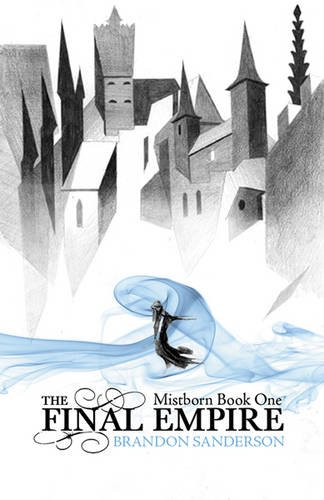
A new reader to Jenn's World (welcome!) pointed out a pretty good example of U.S. v. U.K. cover art. I've mentioned this a couple of times--they're so often completely different.

This is one example of where the U.K. cover kicks our collective butts. To the left is Final Empire, the first book in Brandon Sanderson's Mistborn series.

Honestly, this cover is so awesome, I'm thinking about ordering it from the U.K. (along with my missing Janny Wurts book...curse you U.S. publishers!)

While I like some of the hardcover art from the U.S. release of Mistborn, but the paperbook art...ick. I saw it and literally said: "That cover must be from a Buffy the Vampire spinoff novel."

Because that's what it looks like. Honestly.

Anyway, I now reference what must be one of my favorite author poems about the horribleness of their covers. Coincidentally, it is not only the best, but the only one I've found...

There's a bimbo on the cover of my book
She is blonde and she is sexy, she
Is nowhere in the text, she
Is the bimbo on the cover of my book

— Mike Flynn


(Have I posted that one already? If I have...suck it up)

Normally, or rather sometimes when I'm not buried in my own book (Godsplay) revising it, I do a Monday writing prompt. I missed that this week due to the signing party for the Gathering Storm (awesome! Buy it! Read it!) so I'll do one now.

WRITING PROMPT #8

TITLE: Cover it
GENRE: Any
TYPE: Description

Pick a story, any story, any genre: and describe the WORST cover imaginable that would be possibly created for it. And then describe the author's horror when he opens the box. 100 words or so. Post it in comments or keep it to yourself and snicker.

M example: J.R.R. Tolkein/Fellowship of the rings: A line of blonde, nubile elven dancers form a congo line with Tom Bombadil (complete with yellow hat/coat) and the Barrow Wights on top of the Prancing Pony's bar. Yes, Arwen (who looks like Pamela Anderson) is hanging from the ceiling in a cage.

Blarg

Posted by Unrepentant Escapist

August 27, 2009 -- 1:37 a.m.

I finally figured out what had my subsconscious up in arms. The moon, of all things!

I wrote a scene so that the moon was still full nine days apart. Okay, yeah, that was an error, but couldn't my subconscious have just pointed that out to me rather than let me writhe for days in agony, wondering what was wrong? That was the unsolvable error? That was the reaosn for my writer's block? The freaking moon?

Today was a good day. Until my computer shredded everything I had worked on. I finally hammered the emotional scene into a shape I liked but...BAM! It's gone. And I can't remember a bloody thing I did. I heard a strange whirring sound and tried to save but it died a moment before the little blue bar crossed the screen. Curse you, little blue bar!

I don't know why auto-save failed. But I'm almost ready to chuck this laptop out of my window. It's impossible for me to remember to save things myself when I'm drowning so deeply in Rachell's world.

I'm trying to look at it as an opportunity to create a new and better revision, but it's hard not to be discouraged. I worked so hard.

Writing Prompt (no number, because it's not an official one): Write a flash-fiction (or longer, whatever) horror story involving a frustrated writer and a supposedly "innocent" computer.

Oh well. Time to relax and cuddle up with some episodes of House. I've been having the most delicious dreams about Hugh Laurie.

(Though sometimes I wish Cuddy would just kick him in the groin, just for the sake of strong women everywhere.)

Writing Prompt #7

Posted by Unrepentant Escapist

June 15, 2009 -- 11:37 P.M.

Well, I'm back from my vacation to Issaquah, WA! That means that it's time for another writing prompt. But first, a status update:

I saw my younger brother graduate from high school. I also saw my father for the first time since he was tentatively diagnosed with multiple sclerosis.

It was very difficult. I heard things were bad but not that bad. It hurt me to watch my dad shuffle slowly down the stairs. He says that he has a hard time keeping his balance because he can't feel his feet. I never thought about how important the nerves on the soles of our feet are, because without that pressure feedback, walking can be a bit of a guessing game.

All in all, I think he's handling things all very well. Much better than I would. It made me a little queasy to look at his MRI, complete with skull and eyeballs (strange, but I think I could have recognized his bone structure even if I hadn't known what I was looking at.), but he thought it was cool. He said it's good to see the lesions in his brain, which look like little fireflies on the brain scans, because he knows it's not all a made up disease in his head.

Anyway, my natural response is to run and hide from my emotions and go play video games. I hate to see anyone I love in pain. If I ever get a chance to dedicate a book to anyone, it will be to my mom and dad because they're so courageous.

Anyway, I took a two week break from writing and it's hard to get back into the groove. No rhythm. I haven't done jack squat.

I'll do better when I cheer up. I think I'll get to the acceptance stage about my father soon.

It's amazing how helpful posting my novel online for a critique group has been. Not only does it change the formatting, which helps me get a new perspective, but I can tell when things are moving too slow way easier when I break a scene down into 1000-word chunks. Just about everything I've posted can be chopped down to keep the pace up. Anyway, it'll be ten times better once I put it through its paces.

Mostly that makes me groan because it means I still have half a book to write once I do the cutting. And I think the random stableboy is going to have to go back in to address the male/female balance. If there's space.

Wonder if I should edit the blog posts when I get published? Should I let my readers know I go back and forth on things? Most authors seem to project this aura of infallibility. It probably helps them sell books. All the authors I've met are human, all the books I've read have mistakes--from typos to major errors (like the same guy dying twice in one series--whoops!) and I think it's okay. Serious fans might have a problem with the nice wallpaper being peeled back to reveal the roach-covered wood though, so I'll have to think about it.

On the other hand, maybe so many authors' freaky self-confidence is the reason so many people think they can become best-selling millionaire writers without working at it, so maybe I'm doing a service by bursting the "it's so easy" bubble. Read about how hard Jim Butcher struggled before he found a publisher. That'll make your confidence shake a little, because if it wasn't easy for a future #1 NYT bestseller...

It also proves how important connections are in the professional publishing world. So make them, and don't screw them up once you have them.

We'll now get back to your regularly scheduled writing prompt.

WRITING PROMPT #7

TITLE: Deal with it
GENRE: Any
TYPE: Character

We've all had moments in our life when we've grieved. If your characters don't have something to grieve about, or at least feel some kind of intense emotion about (like seeing the results of their dad's m.s.), there's probably something wrong with your book.

Now you've probably read the Conan-style heroic fantasy where the black-clad bad guy slaughters an entire village or a hapless underling ("Apology accepted, Captain Needa") or the hero's sister/mother/father/kitten. And it was just the cutest, fuzziest kitten a barbarian war-dawg could ever possess.

And you know what the hero's version of therapy is? Kicking villainish butt, that's what. If my brother turns out to be in league with Dr. Evil, whatever, I'm a buff hero who barely has the brains to point a chainsaw in the right direction, so I accept it and move on.

WRONG!

One of my favorite things about the Wheel of Time series was Rand's flashbacks after he is tortured in the box. As a sexual assault survivor, I know some things about nasty flashbacks and his claustrophobia. His weakness and added descent into madness made absolute sense to me. The all powerful Dragon needs a safety blanket to hug when life gets to that hard moment in life.

So that example's not exactly about grief, but it's certainly about intense emotion. And there are other moments when Rand chivalrously grieves over all the women he's harmed. Realistic, I think, even if one does want to say "you gotta break a few eggs to make a souffle, dude." Which is probably what Robert Jordan himself was thinking.

What about your own hero or heroine? Have you taken opportunities to show a hero dealing with strong emotions? Has she or he ever been through the five stages of grief? If you've forgotten, in order, they are: denial, anger, bargaining, depression and acceptance.

Often, heroes in books only through anger and acceptance. They shed a single tear over the burned ruins of their home village and move on to some self-righteous killin'.

Can you use denial in your story? Bargaining? Depression? I think the only time I've ever seen bargaining in the sci-fi/fantasy genre is in Stephen Donaldson's series, so if you can pull bargaining off, you might be doing something semi-unique.

Now's the tricky part: can you write intense emotion without making it melodramatic?

That's something I struggle with, especially with male characters. In real life, grief can be unmanly, and I've been told there's nothing like a crying hero to drive male readers running from the heels. I will go to just about any lengths not to deal with intense emotional scenes. I have to bring myself to the point of self-flagellating to write them. Part of the difficulty, at least for emotional male scenes, stems from the fact I was sexually assault. I have to fight my semi-subconscious belief that men couldn't possibly be real people with real emotions, otherwise this one particular paragon of male virtue couldn't have hurt me and violated me so deeply.

I think the best advice about writing emotion is that nobody likes a hero who wallows. Keep it short and sweet. Angsty adolescent heroes are a bit of a fad right now, but it's not necessary something that needs to be brought out by long soliloquies about the bitterness of life just to prove how sensitive your character is. A lot of emotion doesn't need to be directly written because we've all been there and we can paint the details in our own minds. And there's nothing like a hero who's trying to keep a stiff upper lip to win a reader's sympathy.

Again, to draw on Wheel of Time examples: Rand, while reading Moiraine's note, is moved to tears. We don't need an internal monologue telling us why. Robert Jordan paints the picture with a few guilty phrases and his denial that he's crying.

Or Perrin when he loses his family. He doesn't go crazy with his grief until Faile holds him. So much emotion in such a short space. I think Jordan is a master of characterization and world creation, which is why we all loved him even when we loved to complain about him.

(And speaking of great authors being human, remember when Perrin is talking to Min in book three and says he's never had a sister? And then his sister dies in The Shadow Returns? Whoops. There's another one where Birgitte swears to Elayne and calls her daughter-heir and LATER says she thinks Elayne's lying about being daughter-heir of Andor. Actually, given the extensive world Jordan's created, I think it's incredible how few continuity errors there are in his books. He must have kept the fattest stack of notes ever.)

Anyway, this week, try to put characters and the tough emotions together in at least one scene. Keep it short. Keep it strong. And put yourself in your character's place. What would you feel like if you were in the same position? Chances are, your hero would react similarly because we're all human. Or elvish. Or whatever.

Writing Prompt #6: The shape of memory

Posted by Unrepentant Escapist

May 25, 2009 -- 11:11 p.m.

Title: "Memory"
Genre: Any
Type: Setting/characterization

This is another worldbuilding one. Or characterization. Whatever floats your boat.

In honor of memorial day, I want you to write about and think about how memory has shaped you as a person. How has memory formed you? Would you be the same person if you had different memories? If you woke up with no memories at all, would you be different? Yes, obviously, but how? What restraining influence has memory had on you? Has past experience made you frightened or overly cautious?

For example, my memories of being taunted by my classmates as a child, of having my confidences betrayed by people who called myself "my friends" have made me more shy and reluctant about sharing personal things about myself. On the other hand, I also have memories of how wonderful my friends have been, how supportive they've been in hard times, so I know that they're worth the risk.

A lot of characters seem to come onto the pages with no memories, no past. They have been shaped by a few key points and details, but the ordinary, every day tragedies and successes seem like they're missing from their lives. What are some of the memories that have shaped your character?

A big difference between America cultural (Caucasian, anyway) and other countries, like, say Iran, is that we don't obsess about history as much. Other peoples live in the past, but most people don't even know the date of the civil war (myself included--I have a horrible memory for that kind of thing, even though I'm interested in it). That's good in some ways and bad in other ways.

What place would memory have in an alien society? Is it important? Can they share memories psychically? How would that change their actions/culture? What would be the same? What if the aliens had no memories at all? What if they focussed, exclusively, on the here and now? It's not as farfetched as it seems: there are some mentally disabled kids who seem to have difficulty understanding change. If something IS, it must always have been that way. You can move a block from one stack to another and they'll think that the block has always been in the second stack.

Could there be any advantages to this kind of thinking? How would it affect alien/human negotiations/commerce/war?

For further reading, I'd recommend Guy Gavriel Kay's book Tigana, where a sorcerer tries to wipe out not just a people, but their very memory. It's so essential, it's no surprise people are willing to kill for it and die for it.

Writing Prompt #5 -- taboo. (Not the party game)

Posted by Unrepentant Escapist

May 18, 2009 -- 9:12 p.m.

I should make up a label just for excuses. Mostly, I've just been tired. And I took my cousins out to the sand dunes, and I've been having lots of activities in a new church.

It has always been really hard for me to make friends. I'm a very self-conscious person and I don't have much to talk about since I'm not "plugged-in" culturally. I rarely watch T.V. or movies. Most of the day I sit at my computer, being generally a boring person. So I fail at the small talk. I run out quickly. "So what have you been doing all week?"

Writing. Godsplay reached its 90,000th word today (probably closer to 94,000) so we're almost to the finish line. Hurrah! The problem is, I have to revise everything because I basically snapped the plot in thirds. That leaves things a little incomplete. I'm actually happy about it, because I realized that either I was going to have to slice up characters or do sequels, and I'd rather do sequels.

Enough with the excuses. Let's have today's writing prompty-ness.

Title: "Taboos"
Genre: Any
Type: Setting

Every culture has its taboos, be them religious, cultural, or whatever. Some people have taboos around certain foods. For example, most cultures have a taboo against eating other people. I think David Eddings had a culture that violated that taboo, much to the disgust of some other cultures.

Often, fiction books feature clashes between two distinct cultures. You can make the culture clash even more painful by featuring taboos. What if you have a party and one member violates a taboo that disgusts everyone else? More conflict, even if it's beneath the surface, is always a good thing when it comes to books. How does one explain the inexplainable--like if someone just thinks "eww," but they can't explain why it's "eww?" Survivor episodes have been dedicated to the grossness of eating chicken feet/brains, etc. Grubs as local delicacies.

Mmm, I'm on a food thing tonight. What about taboos as places? Your adventurers need to go to a local temple to save the world, but it will make them outcasts as doing so. In my book, there are a whole caste of untouchables, ala Indian culture, who handle the dead. Taboos can be useful class conflicts, race conflicts. Interracial marriage taboos? Piercing taboos? Anything can be a source of depth to your world.

And you don't even have to have cross-culture clashes. My family had some personal taboos that other families don't. I have some personal taboos--like I don't drink milk and I don't like to watch other people drink milk. I don't know why, it just grosses me out for no apparent reason.

Think of some of the taboos you might want to explore, something to round out your characters and settings. Describe them and, if you want, also describe why that taboo developed. It could be a mythological story or an evolutionary reason--for example, maybe the A'rreoskites have a taboo against eating brains because it spreads "mad dragon disease" or the equivilent.

Anyway, they don't have to be taboos that would make sense to us. The most interesting cultures can be polar opposites to our own, as long as they are believable and comprehensible. If they're alien, they don't have to be believeable.

"Don't put your finger in his splooit! That's taboo!"

And this is how classic drinking games get born.

Writing Prompt #4: Help! My mother's a demon!

Posted by Unrepentant Escapist

May 11, 2009 -- 1:31 p.m.

Title: "De-mom"

Genre: Fantasy
Type: Character

This Monday writing prompt goes out in honor of mother's day.

We've all had moments where we wish our mother could just disappear in a cloud of smoke? Where what if she ACTUALLY could? What if, for all your life, it turns out your mother was masquerading as a human but she actually was a demon.

Now, is she an evil demon? A satanic, red-skinned, horned corrupt beast from Christian mythology or a fantasy demon, one of the lovably stupid monsters whose only purpose is to kill everything in sight? Is she reformed, or is she playing at being human for nefarious reasons. Did she have a child because she fell in love or are you and your siblings just plot pieces in her twisted game against the Gods? And what is she going to do when she finds out YOU KNOW.

Now, find the characteristics in your mother that you consider "demonic" and exaggerate them. Maybe your reformed escapee mother (who fled the netherworld so her child wouldn't be sacrificed on an evil alter) has always been obsessed with cleaning because she knows her former lord and master uses creepy-crawlies to spy. Maybe that's why she's afraid of cockroaches, too. They aren't just carriers of disease that might hurt her sweet, gooey baby, but they're also the minions of evil.

And what about you? Are there any demonic powers you wish you could have? What would you do if you could levitate or conjure sulfuric smoke or that sort of thing. How would you interact with your mother. Would you compete against her for dominance if your powers weren't as developed as hers? Would you feel resentful because you never got a chance to use them before because she made the decision of keeping you ignorant.

The point of this exercise is to draw what you know from real life and warp it slightly. That's how you create true characters.

But always remember the words: motivation, motivation, motivation! A plot springs out of a realistic character's motivations, so you have to always keep it in mind.

Writing Prompt #3 -- Sick and twisted

Posted by Unrepentant Escapist

May 4, 2009 -- 4:52 a.m.

It's that time again...

Title: Sick and Twisted
Genre: Any
Type: Description

99% of the description in books is cliche. Dressed up cliches, maybe, but still cliche. Yet some description still moves us to horror, to shudder, to moan with pain.

What are the things that absolutely revolt you? What characteristics of a person, animal or situation make you want to toss your cookies all over the floor?

For me, there are certain color combinations, smells and sights that just sicken me. Jiggling jowl fat. Yellow and purple together. Drool glistening in the light.

What kind of things naturally revolt you? Write down the five most revolting things you can think of. For each of them, then write down five more things connected to those original objects having to do with why they seem so horrible.

For example, I once had a nightmare about bees crawling under my skin. The most horrifying thing was sitting there watching the bump under my flesh rise and fall and ripple, and the feelings of utter, utter powerlessness that came from watching it.

So I might write down the words "burrowing skin bees." Then, I might write: 1) helplessness, 2) queasy motion beneath skin, 3) sharp stingers, 4) yellow, 5) my veins popping.

The trick is, none of the 30 items on the list can be the same. I can't write "blood" next to my burrowing skin bees (who WILL show up in a novel someday) and also next to my carnivorous footworms (one reason I'm not likely to move to certain parts of Africa...).

Now, can you evoke the same shivers in your own writings? Can you use some of the same description points as references in your text? Can your villain's laughter not just hurt your hero's ears but "burrow into his flesh until he could feel it squeezing his veins, like a fist whose nails were sharp enough to make them pop"?

If you can't scare/horrify/sicken yourself, there's no way you can terrify your reader. One of my friends was in the middle of reading Test of the Twins, by Margaret Weis and Tracy Hickman. When one of the villains put his hand on his apprentice's chest, searing five ever-bleeding holes into the skin beneath, someone came up to my friend and touched her. She jumped five feet into the air.

That should be your goal.

Writing Prompt #2 -- Evil unicorns

Posted by Unrepentant Escapist

April 27, 2009 -- 5:40 p.m.

Got home from my writing convention. Boy, was it a draining week. Good, but also exhausting. Here's this week's writing exercise. I'll have to standardize the format later. I'm ready to slump into bed and sleep for three days.

Writing Prompt #2:
GENRE: Fantasy
TYPE: Character/Setting

There are certain tropes that can be found everywhere in the fantasy universe, whether its in Terry Brooks to Terry Goodkind. Some of those are races, such as dwarves, elves, fairies, etc. Take one of those races and twist it in a way that you hadn't thought of before. For instance, normally unicorns are white, gentle and have a thing for nubile young virgins. What if unicorns were the opposite of what you'd expect? Black-skinned, obsidian war-horses who are unashamedly attracted to 'loose women'? In their human form, maybe they wear black leather. If they're urban fantasy unicorns, maybe they ride Harleys and get into fistfights over who gets to sleep in the Princess' stable.

Go forth and write well.

Monday Writing Prompt #1 — Ab Lincoln

Posted by Unrepentant Escapist

April 13, 2009 -- 11:06 p.m.

This blog is a M-F, if you haven't noticed. Every Monday will be writing prompt day. I've noticed that temporarily stretching my mind on other projects can make me come back to a novel/short story I'm sucking on with renewed vigor. Prompting is a sure cure for writing blocks.

Title: "Ab Lincoln"
Genre: Alternative History
Type: Situation (vs. character, setting, etc.)

Instructions: Relax. Take two deeps breaths. Write "teh winner is mme" five times on your keyboard and stare at it. Accept that you will make typos. Except that your grammar won't always be perfect — first drafts can be liberating, not strangling. Now, when you feel ready, write 250-500 words on the prompt below. When there are actually people reading the blog, feel free to post your prompt in the comment spots. This is a time to mess around—to let your inner editor curl up and die. You can either write it like an essay, a short story or a series of bullet points. Punctuation is optional.

Now: Imagine what would have happen if Abe Lincoln had been born "Abagail" Lincoln. Does history make the man or does the man make history? Who would have stepped up to take Abraham Lincoln's place? Would the Civil War have been delayed, or even deterred? Would the Confederate stares have broken up anyway? Would Ulysses S. Grant ever have risen to the top? What would happen to Abagail? Would she still have felt the same sense of mission? What would have happened? Would Abagail have dressed in drag and longed for a sex-reassignment surgery, or would her body shape her expectations? And what about John Wilkes Booth—would he still shoot the next guy, or would he go on to have a successful stage career? What would the ramifications be on our modern world. What would have been different if Abe Lincoln hadn't been born in his log cabin, but on a southern plantation?

Done? You don't have to answer all the questions—in fact, you can make up your own questions and answer them. But this is what I'm thinking about today.

Finish before going onto the next section, which relates this prompt to your current project.

Okay, now think about how the characters in your own story. How much of their greatness comes from within them and how much from the circumstances? Are their actions dictated by their gender? How much social mobility do they have? If your hero stepped back, would the Gods of Kleptash just move on to the next guy? What happens to the next guy? How do the history of our characters shape our characters?

The bottom line is: what are the things that make your character unlike any other? What are the circumstances that make the conflict? What brings the two together? These are the most fundamental problems left unaddressed in beginning writing (and some older writer's too). It's like a mystery novel: even in speculative fiction, we need to have everything all wrapped up and rational, even if real life isn't rational.